
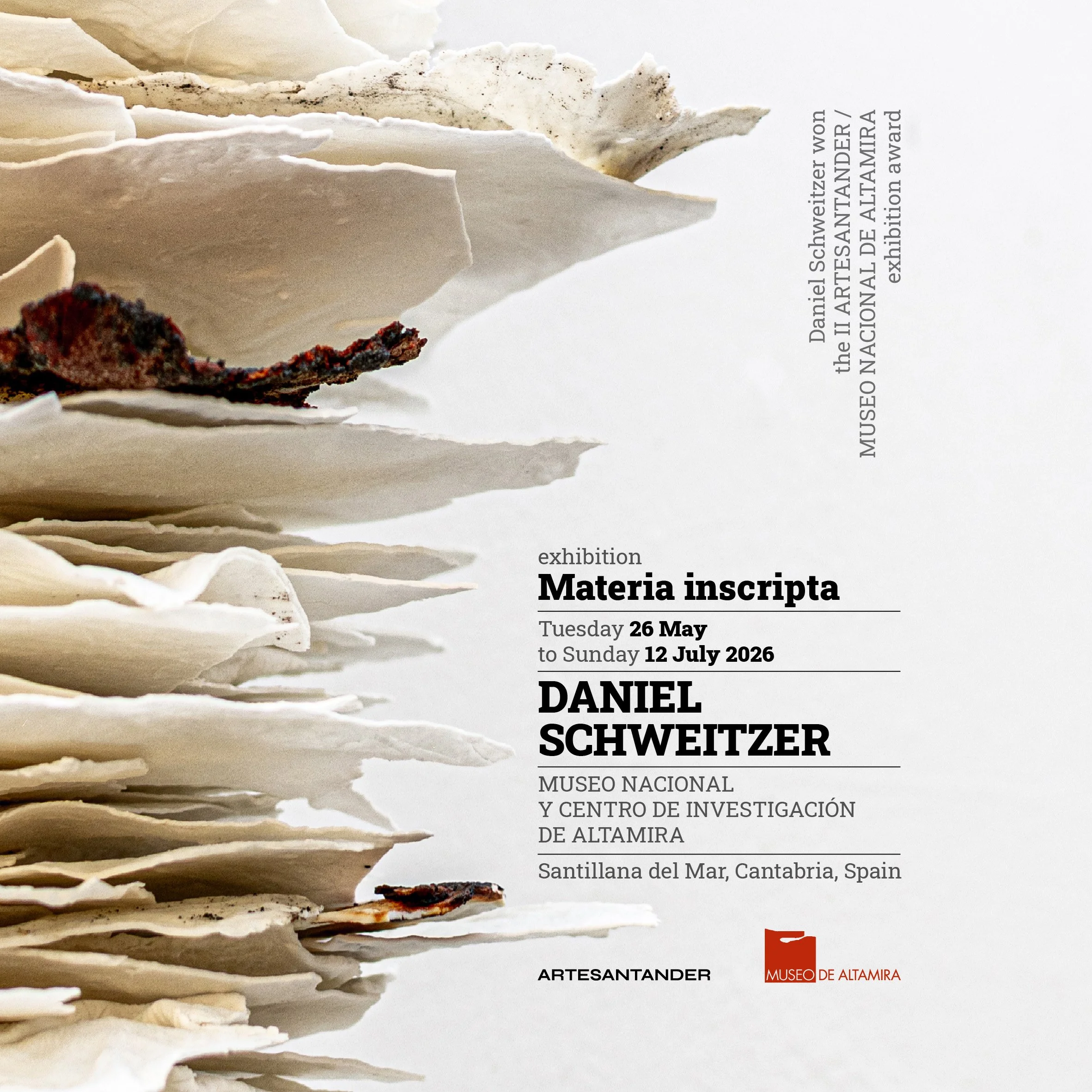
Detail of one Daniel Schweitzer´s Materia Inscripta artworks being exhibited, initially from May 26, 2026 til July 12, 2026. Now extended to July 19, 2026.

The artistic approach of Daniel Schweitzer (b. 1988, Germany) is based on a layering of bioceramic sheets interspersed with patches of pigment, creating a sculptural installation through which he reflects on various aspects. On the one hand, the importance of light in creation and habitation; on the other, the layering that characterises archaeology, reconstructing the past and our understanding of it; and, furthermore, the paintings in the Altamira cave: figures which, although their formal qualities are recognised, are devoid of any meaning because we lack the cultural context of the time in which they were created.
This exhibition by Daniel Schweitzer is the result of the 2nd ArteSantander / Altamira Museum Exhibition Prize 2025. The collaboration between the ArteSantander Fair and the Altamira Museum is based on both organisations’ interest in fostering partnerships between artists and institutions, but above all in highlighting the idea of continuity in artistic creation throughout human history.
Altamira Museum
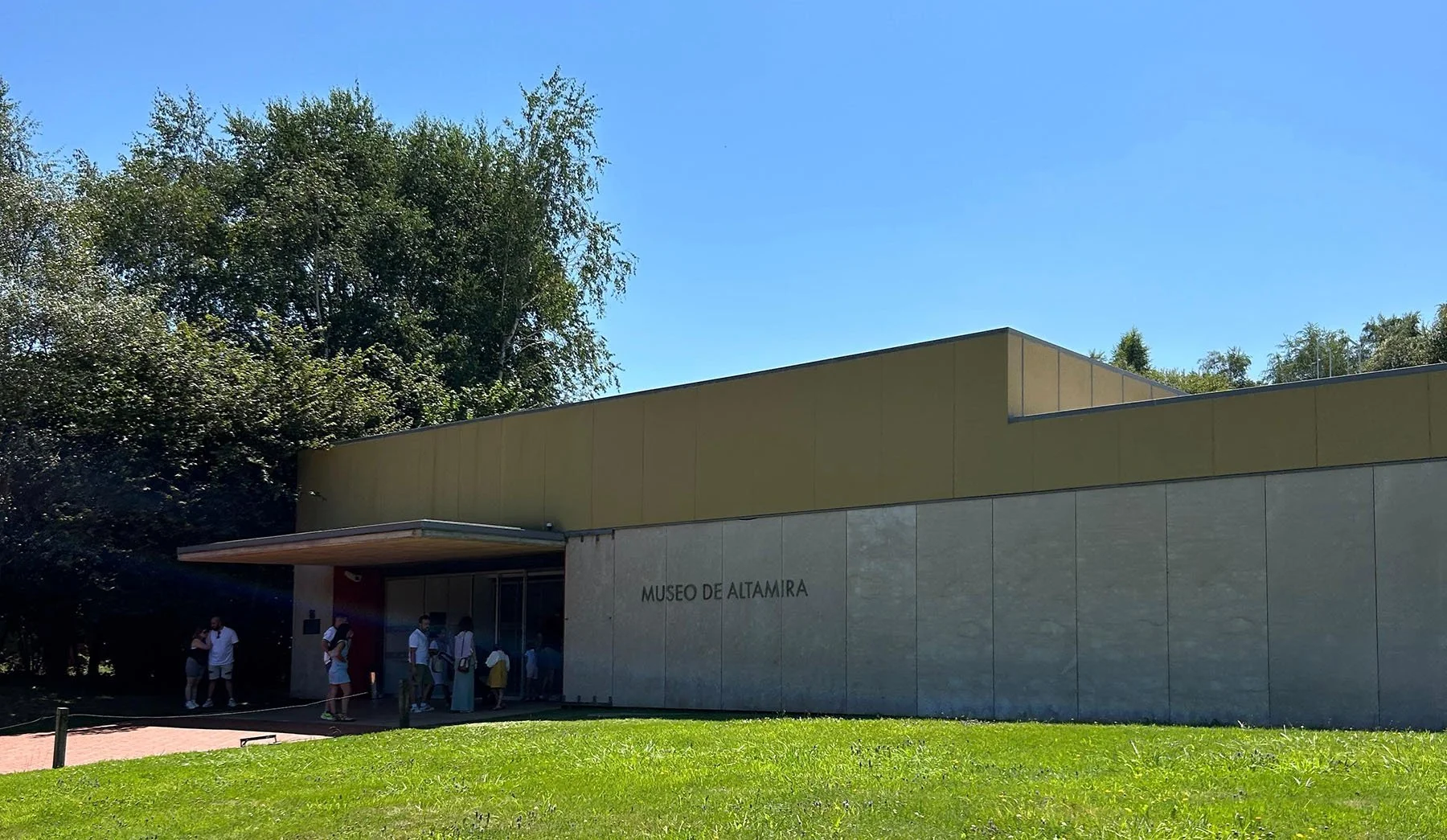
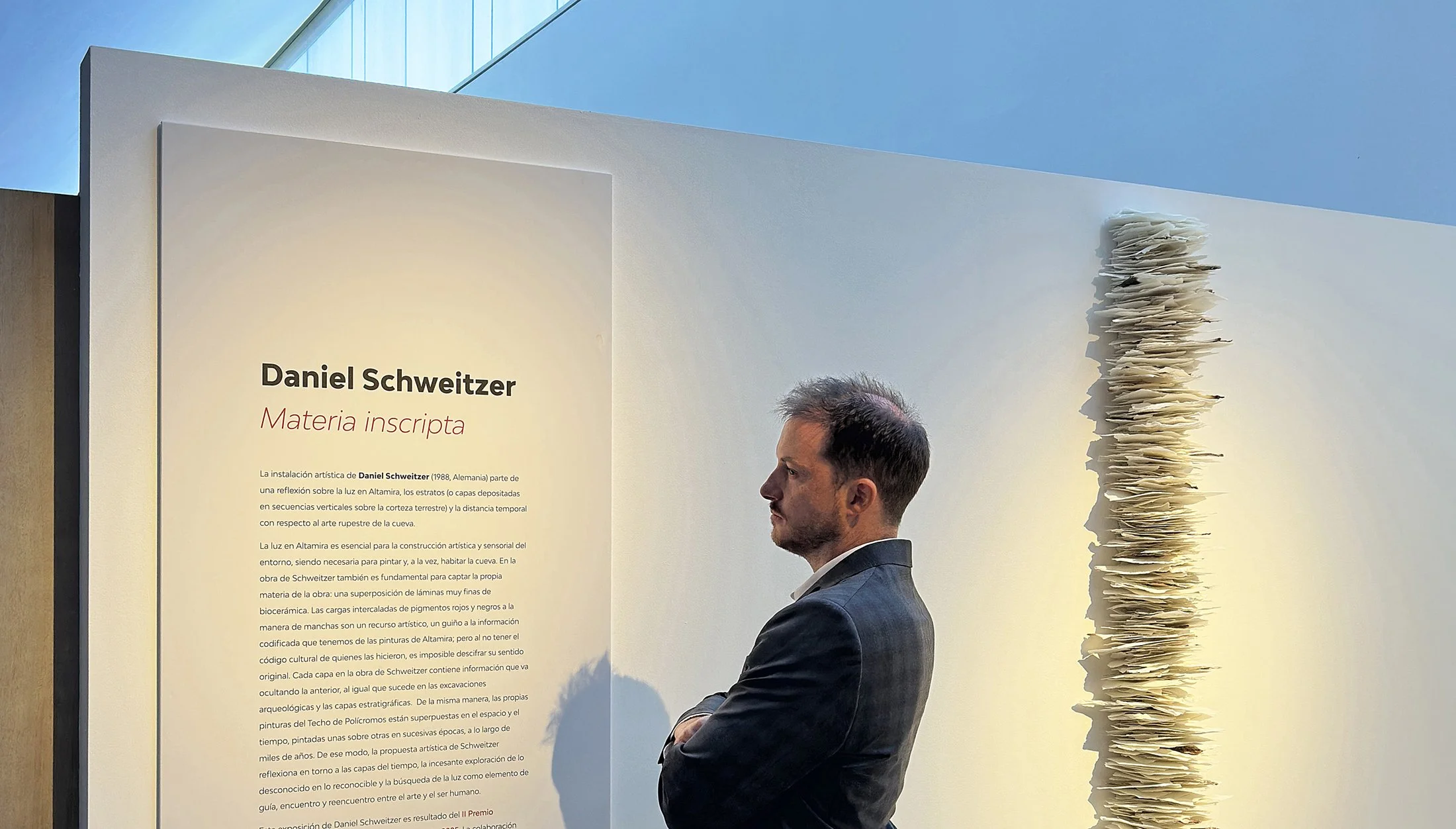
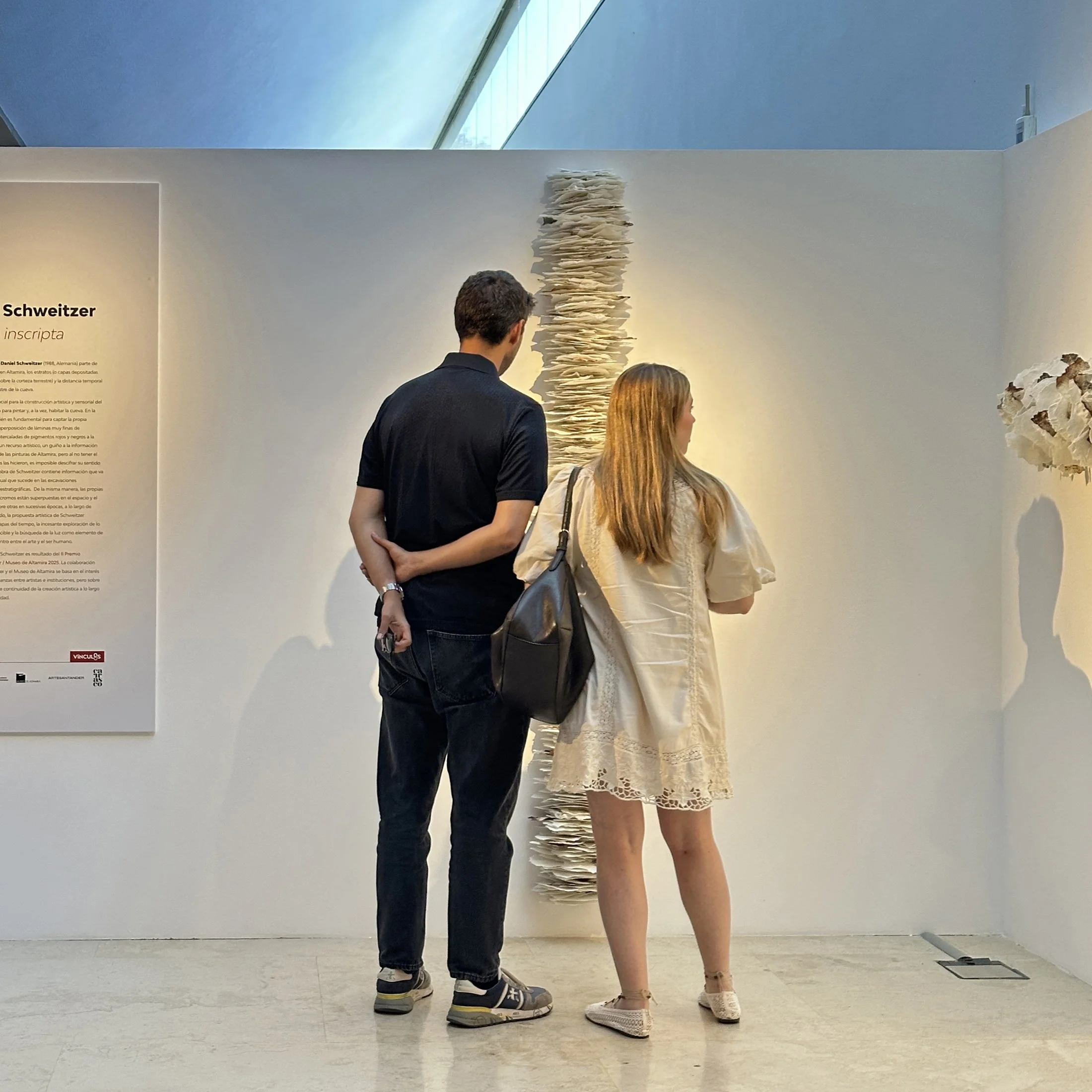
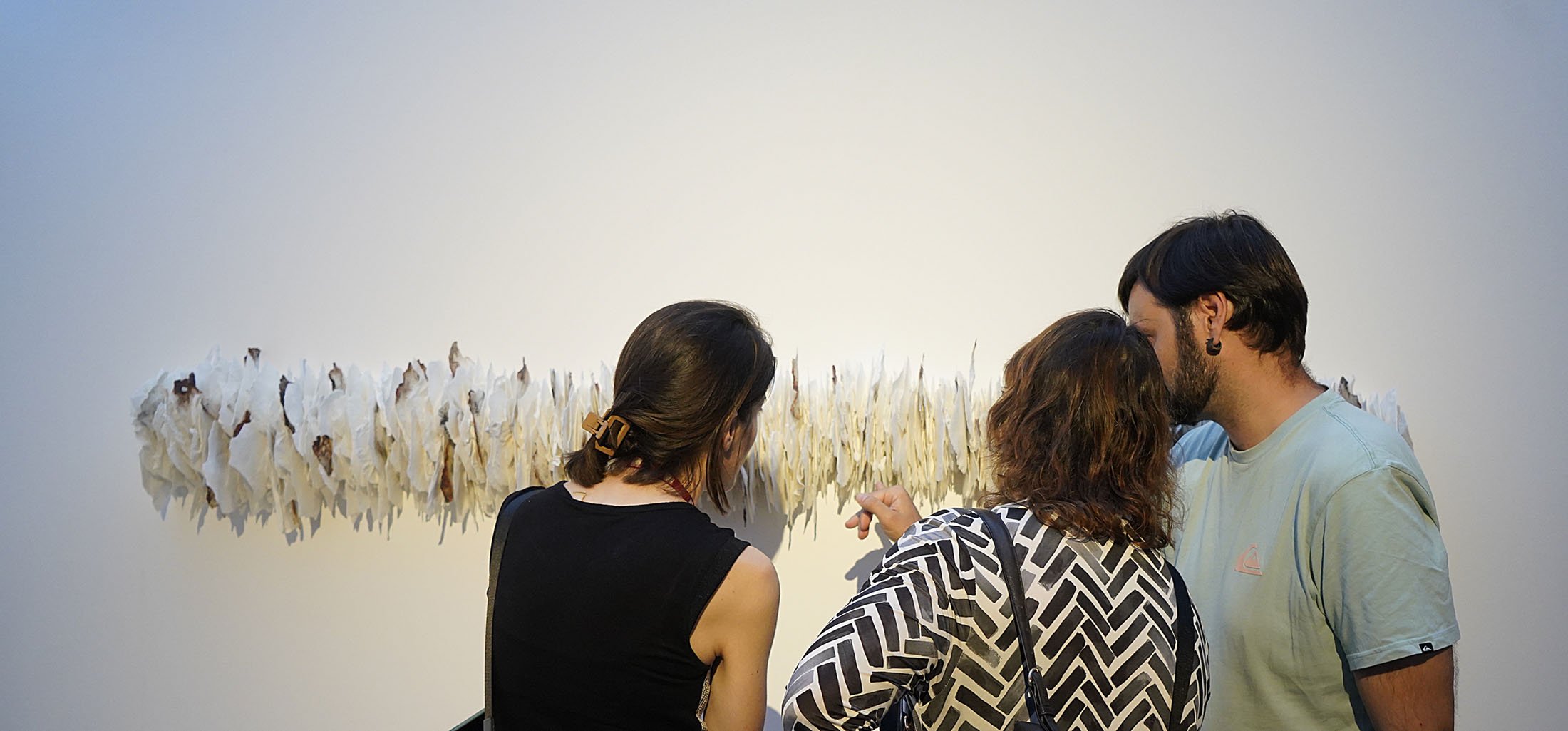
Photo courtesy of Museo Nacional de Altamira.
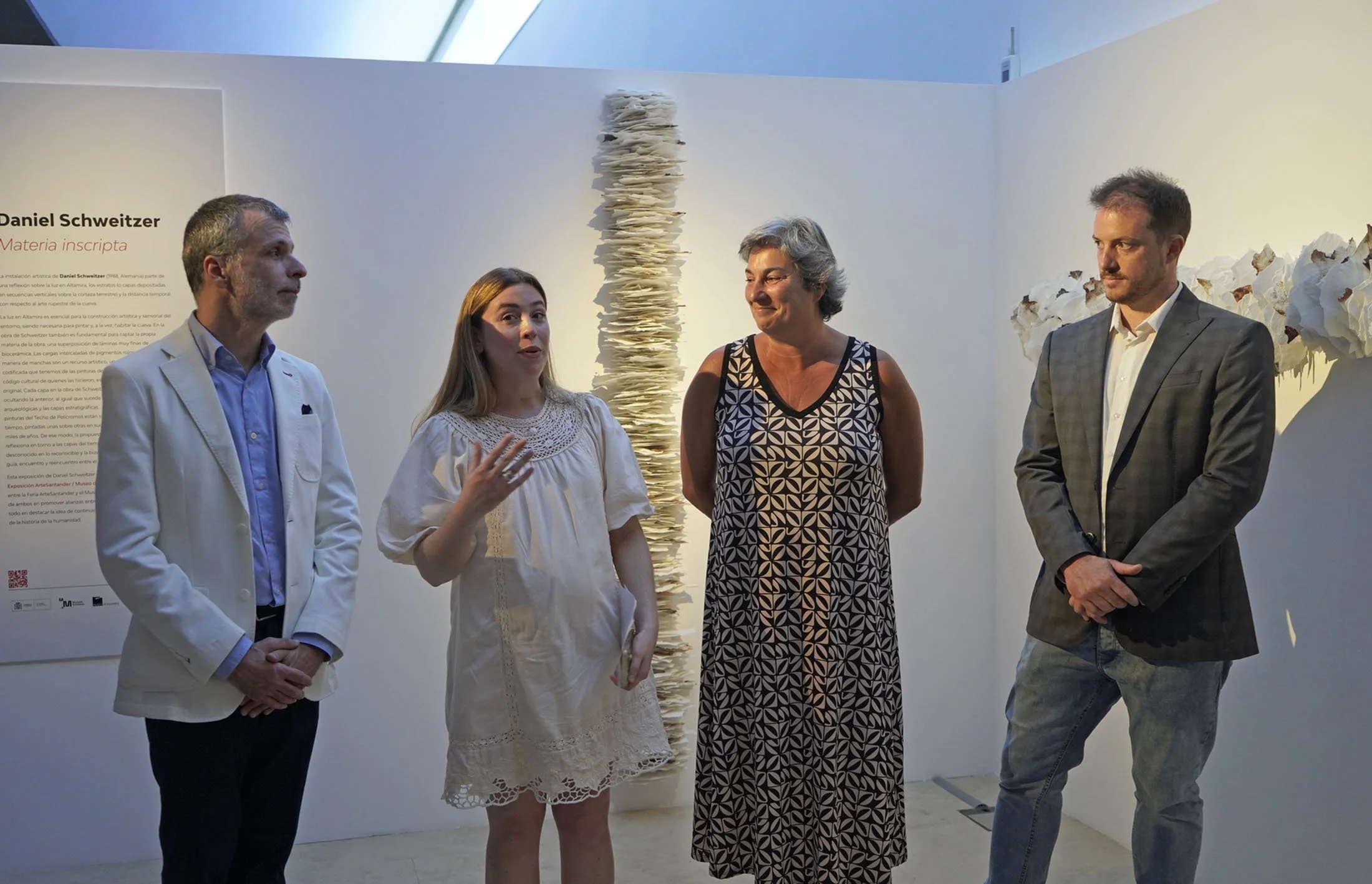
Photo courtesy of Museo Nacional de Altamira.
With Carolina Bazzi from ARTESANTANDER, Museo Nacional de Altamira director Pilar Fatás and Daniel Schweitzer. Photo courtesy of Museo Nacional de Altamira.
"Materia Inscripta", by Daniel Domingo Schweitzer, elevates porcelain to a monumental status through an installation that challenges its very mineral nature. Entering the exhibition space is to encounter a visual paradox: the porcelain sheds its traditional hardness to become slabs—fragile and delicate—that evoke the geological memory of a place. This project, conceived for the Altamira National Museum and Research Centre, speaks to us of the impact and resilience of the human footprint in the face of the passage of time; it forces us to reconsider what we mean by permanence in a world where everything seems destined to disappear.
Organised like a layered archive, thin ceramic sheets follow one another in an analogy of the passing of the centuries. Each layer offers a glimpse of delicate hues that emerge from the body of the work through the narrow gaps in the weave. The piece draws inspiration from archaeological stratigraphy and from the very process of excavation, which gradually reveals stories etched into the earth. Just as the cave walls bear the traces of those who came before us, in the installation each layer overlaps the one beneath it like a palimpsest. Perhaps the rust stains hint at a message, but, like cave paintings, they remain as lost codes, impossible to decipher.
The poetry of this project lies in transforming the rigidity of ceramic into sheets of organic subtlety that interact with light and shadow to expand into the space. Their lightness is the result of a process of technical research in which porcelain is blended with biodegradable elements, allowing for a plasticity that would otherwise be unattainable. In this way, Schweitzer reinterprets the material through a new language characteristic of the 21st century, where beauty lies not in the perfection of the finish, but in the honesty of the crack and the jagged edges. “Materia Inscripta” invites visitors to the gallery to immerse themselves in the experience.
The viewer becomes an archaeologist of the invisible, compelled to shift their perspective and move around in order to discover, amidst the purity of white and the filtering light, the secrets the artist keeps hidden beneath the surface. Ultimately, it reminds us that history is a trail we continue to construct with every glance.
Tamara Jacquin